


2026 Mitsubishi Outlander near Gaithersburg, MD
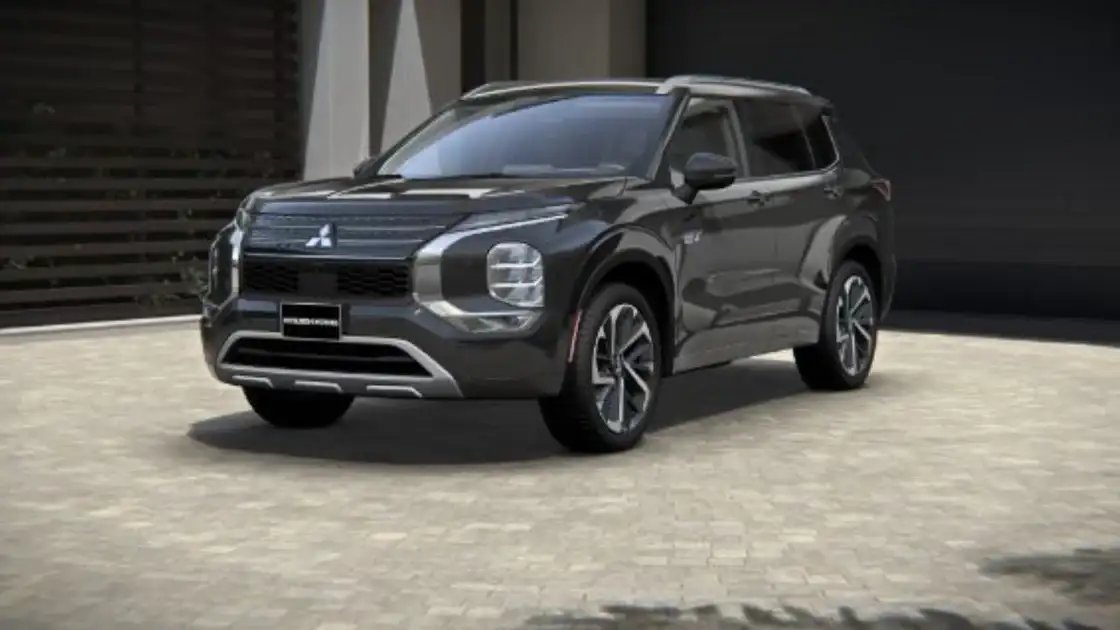
The 2026 Mitsubishi Outlander continues its role as a technically focused three-row crossover designed to balance efficiency, drivability, and modern vehicle engineering. For the 2026 Mitsubishi Outlander, Mitsubishi introduces a newly developed mild-hybrid gasoline-electric powertrain that replaces the previous naturally aspirated engine configuration. This update reflects a deliberate shift toward electrified assistance aimed at improving low-speed responsiveness and overall operational smoothness without requiring external charging. The 2026 Mitsubishi Outlander platform itself remains consistent with the current-generation architecture introduced earlier in the decade, retaining its structural layout, interior packaging, and drivetrain options while incorporating targeted mechanical advancements.
This model is positioned as one of the most accessible three-row vehicles in its segment, and its engineering updates are focused on enhancing everyday performance rather than altering the vehicle’s fundamental design. The 2026 Mitsubishi Outlander is engineered to deliver predictable behavior across urban, suburban, and highway driving scenarios through integrated powertrain tuning, chassis refinement, and electronic control systems.
Newly Engineered Mild-Hybrid Powertrain Architecture
The most significant technical update for the 2026 Mitsubishi Outlander is the introduction of an all-new mild-hybrid powertrain. This system is built around a 1.5-liter turbocharged 16-valve four-cylinder gasoline engine that has been designed and developed by Mitsubishi Motors. The engine replaces the outgoing 2.5-liter naturally aspirated unit and serves as the foundation for the brand’s first mild-hybrid application in the Outlander nameplate.
The mild-hybrid system provides electrified torque assistance during initial acceleration and low-speed driving. Energy is recovered during deceleration and braking events and stored in a compact electrical system that supports the engine when additional torque is required. This configuration reduces the load placed on the internal combustion engine during start-stop operation and low-speed transitions, resulting in smoother throttle response and improved drivability in traffic-heavy environments.
The turbocharged design allows the engine to deliver consistent output across a broad operating range, while the electric assist helps mitigate turbo lag during off-the-line acceleration. This coordinated system is intended to improve confidence during city driving, parking maneuvers, and gradual acceleration without altering the overall ownership experience associated with a gasoline-powered vehicle.
Transmission Calibration and Power Delivery Control
The powertrain of the 2026 Mitsubishi Outlander is paired with a continuously variable transmission that has been calibrated specifically to work with the new mild-hybrid system. Transmission logic prioritizes smooth ratio changes and consistent engine speed management under varying load conditions. The integration of electric torque assistance allows the transmission to operate more efficiently during low-speed acceleration, reducing abrupt ratio changes and maintaining stable engine operation.
Transmission programming emphasizes predictable response during throttle application, controlled deceleration during coasting, and seamless engagement during stop-and-go driving. These characteristics are particularly noticeable during urban commuting, where frequent speed changes demand consistent coordination between the engine, electric assist system, and drivetrain components. The result is a refined driving experience focused on smoothness rather than aggressive performance tuning.
All-Wheel Control System Integration
Available all-wheel-drive configurations on the 2026 Mitsubishi Outlander continue to utilize the brand’s integrated vehicle dynamics technology. The system manages torque distribution between the front and rear axles based on road conditions, steering input, throttle position, and vehicle speed. This electronic control strategy enhances traction and stability across a wide range of driving surfaces.
The all-wheel-drive system operates in coordination with the mild-hybrid powertrain, allowing electric torque assistance to contribute to controlled launches and stable low-speed maneuvering. This integration supports consistent traction during wet or uneven road conditions while maintaining predictable handling characteristics. The system is engineered to assist driver input rather than override it, ensuring that vehicle behavior remains linear and controllable.
Exterior Engineering and Aerodynamic Consistency
The exterior design of the 2026 Mitsubishi Outlander carries over from the previous model year without cosmetic changes. This continuity reflects the effectiveness of the existing body design in terms of structural integrity and aerodynamic efficiency. The exterior panels are shaped to manage airflow around the vehicle, contributing to reduced wind noise and improved stability at highway speeds.
Lighting elements are engineered for visibility and clarity, with headlamp and taillamp assemblies designed to deliver consistent illumination while maintaining defined beam patterns. Wheel and tire specifications are selected to balance ride comfort with steering response, supporting predictable handling during everyday driving. Although the exterior styling remains unchanged, its engineering continues to support the functional performance objectives of the 2026 Mitsubishi Outlander.
Interior Structure and Cabin Engineering
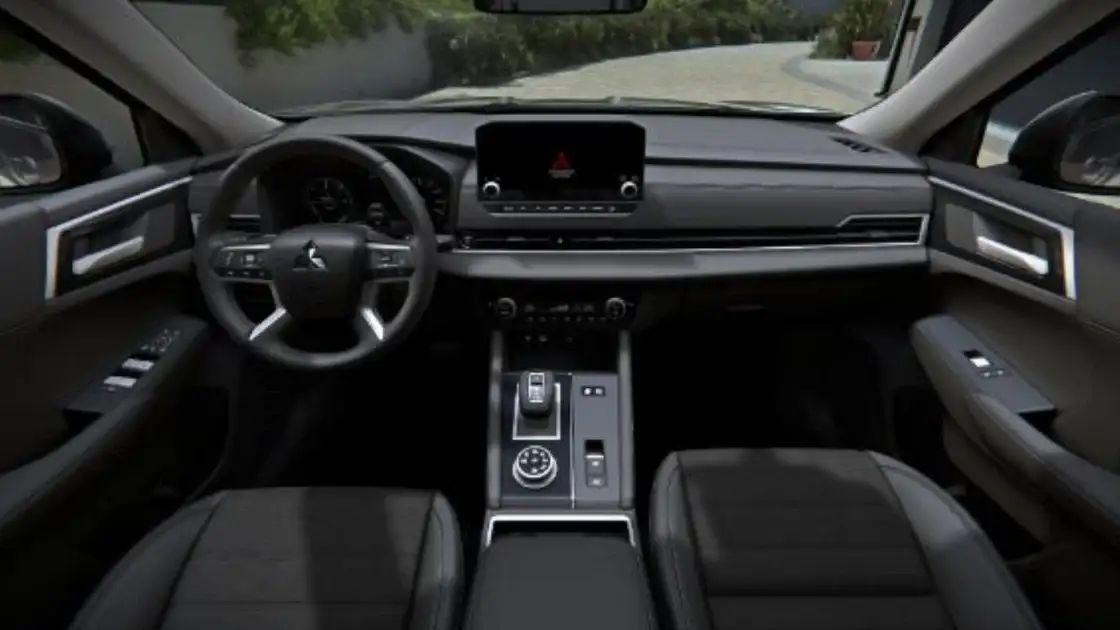
Inside the cabin, the 2026 Mitsubishi Outlander maintains a layout focused on usability, occupant comfort, and efficient space utilization. The dashboard architecture places key information directly within the driver’s forward field of view, reducing the need for excessive eye movement during operation. Control interfaces for climate, infotainment, and vehicle settings are positioned for straightforward access and consistent operation.
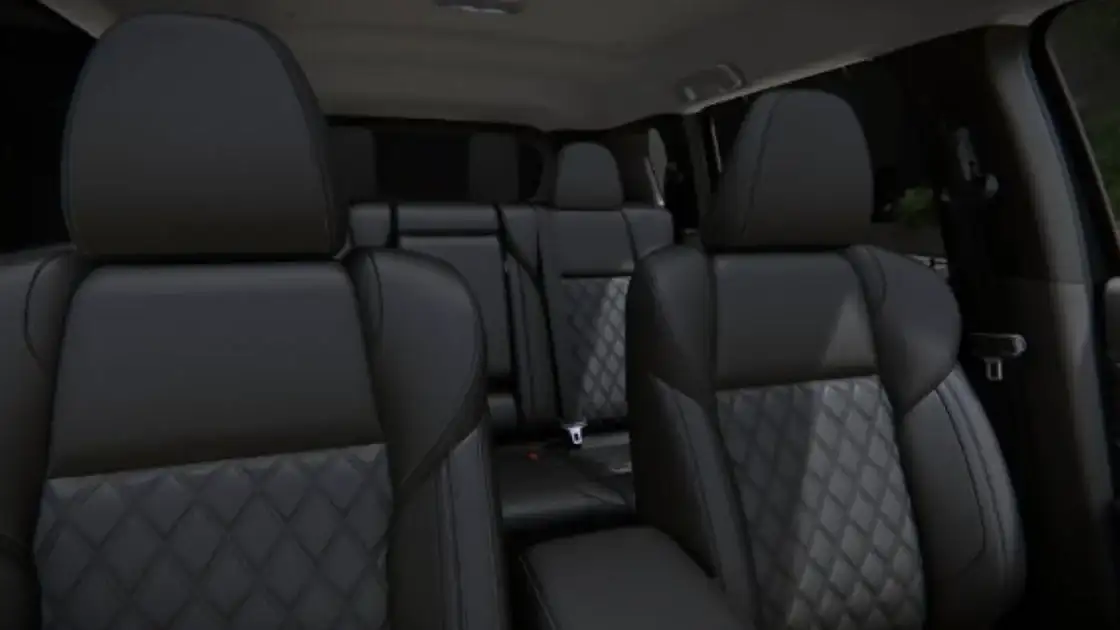
The three-row seating configuration supports flexible passenger and cargo arrangements. Seating structures are engineered to provide consistent support while maintaining compliance with safety standards. Interior materials are selected for durability and acoustic control, contributing to a cabin environment that minimizes road noise and powertrain intrusion during extended driving sessions.
Infotainment Systems and Digital Instrumentation
The 2026 Mitsubishi Outlander incorporates modern infotainment technology designed to support connectivity and information access without unnecessary complexity. Available touchscreen displays provide high-resolution graphics and responsive input for media, navigation integration through connected devices, and system settings. Interface layouts emphasize clarity and logical menu structures to reduce driver distraction.
Digital instrumentation delivers vehicle status information such as speed, system alerts, and hybrid operation indicators. These displays are engineered to present data clearly and consistently, allowing drivers to interpret system behavior quickly. The infotainment and instrumentation systems are designed to support daily usability rather than serve as standalone entertainment features.
Advanced Driver Assistance Technologies
Safety systems in the 2026 Mitsubishi Outlander are supported by a network of sensors, cameras, and electronic control modules that monitor the surrounding environment. These systems are designed to assist drivers by providing alerts and corrective actions when potential hazards are detected. Functions such as forward collision mitigation, lane support features, and adaptive cruise control are calibrated to operate smoothly and predictably.
The vehicle’s structural design incorporates energy management strategies intended to manage impact forces and support occupant protection. Reinforced body structures and carefully engineered load paths contribute to overall safety performance. These systems are designed to function as supplemental support tools and are integrated to maintain consistent vehicle behavior.
Suspension Tuning and Ride Control
The suspension system of the 2026 Mitsubishi Outlander is tuned to balance ride comfort with handling stability. Suspension geometry is designed to absorb road irregularities while maintaining consistent tire contact. Spring and damper calibration support controlled body movement during cornering and braking, contributing to a stable driving experience across varying road conditions.
Steering calibration emphasizes linear response and predictable feedback, allowing precise control during low-speed maneuvering and steady tracking at highway speeds. The mild-hybrid system further enhances ride quality by reducing abrupt drivetrain inputs, supporting smooth transitions during acceleration and deceleration.
Trim Strategy and Model Range Structure
For the 2026 Mitsubishi Outlander, Mitsubishi expands the vehicle’s lineup with the introduction of a new LE trim positioned between the ES and SE grades. This addition provides a broader range of standard equipment configurations without altering the vehicle’s underlying mechanical structure. At the upper end of the range, a new SEL Black Edition introduces distinct visual elements while retaining the same powertrain and chassis specifications.
The return of the Ralliart model adds a performance-inspired option to the lineup. While appearance and feature content vary by trim, all configurations share the same mild-hybrid powertrain architecture and drivetrain engineering introduced for the 2026 Mitsubishi Outlander. This consistent mechanical foundation ensures uniform driving characteristics across the model range.
Engineering Focus on Long-Term Operational Stability
The 2026 Mitsubishi Outlander is engineered with durability and system consistency in mind. Powertrain components are designed to operate reliably under a wide range of environmental and driving conditions. The mild-hybrid system is integrated to function seamlessly with traditional mechanical components, minimizing additional complexity while delivering tangible benefits in drivability.
Thermal management strategies support stable operation of both gasoline and electrical components, ensuring consistent performance across temperature extremes. Electrical architecture is designed to accommodate current and future system requirements without compromising overall vehicle integrity.
Schedule a Test Ride at Younger Mitsubishi
Drivers interested in evaluating the technical updates of the 2026 Mitsubishi Outlander can benefit from experiencing its systems in real driving conditions. A scheduled test drive allows direct assessment of the mild-hybrid powertrain’s low-speed response, the smooth transmission behavior, and the integrated all-wheel-drive capability. Evaluating the vehicle on local roads provides insight into its suspension tuning, steering calibration, and interior usability. Our team at Younger Mitsubishi near Gaithersburg, MD can provide detailed guidance on system operation and feature functionality during the drive. Experiencing how these components work together offers a clear understanding of the engineering priorities behind the 2026 Mitsubishi Outlander.