


2026 Mitsubishi Outlander near Owings Mills, MD
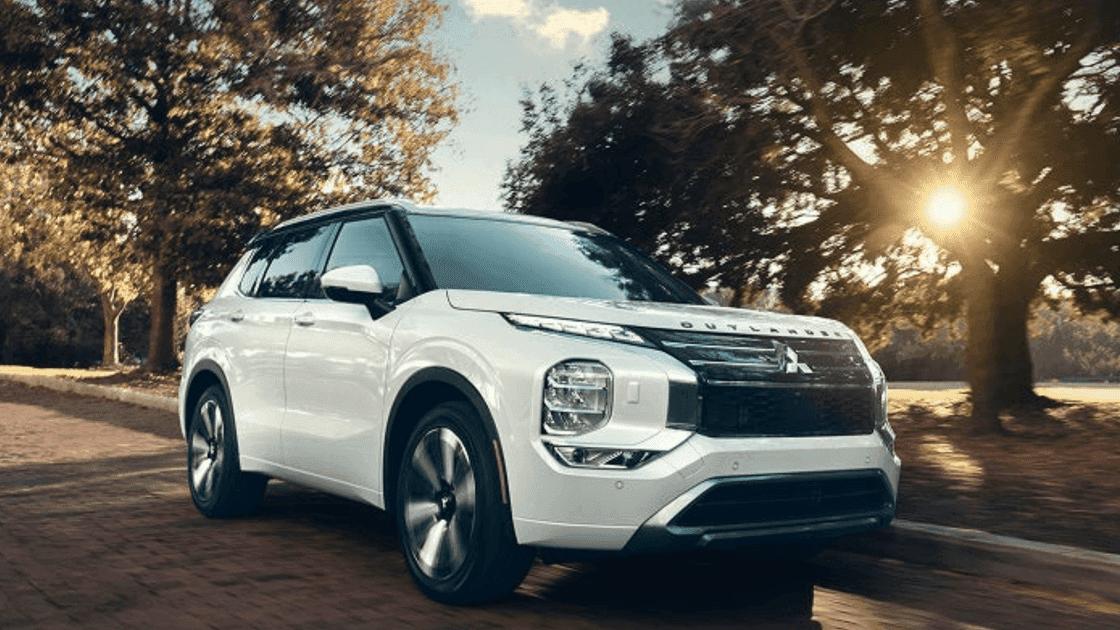
The 2026 Mitsubishi Outlander introduces a fully electrified lineup through the addition of a mild-hybrid system across all models. This update replaces the previous naturally aspirated gasoline engine with a turbocharged hybrid-assisted configuration. The system integrates a 1.5-liter four-cylinder engine with a 48-volt lithium-ion battery and a belt-driven starter generator. The design supports improved efficiency, controlled engine operation during idle conditions, and supplemental torque during acceleration. The vehicle retains its three-row configuration and incorporates updates to steering calibration, suspension tuning, and interior usability that were introduced in the previous model year.
The 2026 Mitsubishi Outlander is available in front-wheel drive and all-wheel drive configurations. The all-wheel drive system uses Mitsubishi’s Super-All Wheel Control architecture, which integrates multiple stability and traction systems. Trim levels include ES, LE, SE, and SEL, along with additional variants that incorporate distinct design and equipment features. Exterior revisions include updated front fascia components, revised lighting elements, and new wheel designs measuring either 18 or 20 inches depending on trim.
Hybrid-Assisted Engine Performance and Output Metrics
The internal combustion engine used in the 2026 Mitsubishi Outlander is a Mitsubishi-developed 1.5-liter turbocharged inline four-cylinder unit identified as the 4B40 Version 2. The engine operates with a compression ratio of 10.5 to 1 and is calibrated for regular unleaded fuel. It produces 174 horsepower at 6,000 revolutions per minute and 206 pound-feet of torque within a range of 3,000 to 4,000 revolutions per minute.
The hybrid system supplements the engine through a belt starter generator that provides torque assistance during acceleration. This support occurs at lower engine speeds, improving responsiveness during initial acceleration and mid-range driving conditions. The system also enables engine shutdown during low-speed coasting and stationary operation to reduce fuel consumption and emissions. Engine restart is managed through the belt starter generator, which operates with reduced vibration compared to a conventional starter motor.
Front-wheel drive models achieve fuel economy ratings of 26 miles per gallon in city driving, 31 miles per gallon on the highway, and 28 miles per gallon combined. All-wheel drive models achieve 26 miles per gallon in city driving, 30 miles per gallon on the highway, and 27 miles per gallon combined. The fuel tank has a capacity of 14.5 gallons.
Disclaimer: 2026 EPA Fuel Economy Estimates: 26 City/31 Highway/28 Combined for Outlander ES, LE, SE & SEL 2WD, 26 City/30 Highway/27 Combined for Outlander ES, LE, SE, SEL & Trail Edition S-AWC. Actual mileage may vary with driving conditions. Use for comparison only.
48-Volt Electrical Architecture and Energy Management
The 48-volt electrical system is a central component of the vehicle’s hybrid functionality. The lithium-ion battery is positioned beneath the third-row seat, preserving passenger and cargo space. The belt starter generator performs multiple roles within the system. It captures electrical energy during engine operation, reducing reliance on a traditional alternator and lowering engine load.
During deceleration and coasting below 13.5 miles per hour, the system can shut down the engine to conserve fuel. When the vehicle is stationary, the automatic start-stop system disables the engine and uses the belt starter generator to restart it when needed. This process minimizes noise and vibration during restart events.
The system also provides torque assist during acceleration by drawing energy from the 48-volt battery. Once the battery reaches capacity, charging is suspended to reduce parasitic losses. A DC-DC converter manages power distribution between the 48-volt system and the conventional 12-volt electrical system, ensuring consistent operation of vehicle accessories and control systems.
Continuously Variable Transmission and Drive Characteristics
The 2026 Mitsubishi Outlander uses a continuously variable transmission identified as the W1CJE. This transmission is configured with an eight-speed sport mode that simulates stepped gear changes. The system improves responsiveness by providing faster transitions during acceleration while maintaining the efficiency benefits of a continuously variable design.
Step-shift control enhances the driving experience by delivering a response pattern similar to that of a conventional automatic transmission. The transmission is optimized to operate in coordination with the hybrid system, ensuring smooth torque delivery and consistent acceleration across various driving conditions.
Super All-Wheel Control and Traction Management
The Super All-Wheel Control system integrates electronically controlled four-wheel drive with Active Yaw Control, Active Stability Control, and Anti-lock Braking systems. The system continuously monitors inputs such as steering angle, yaw rate, wheel speed, and braking force to determine optimal torque distribution.
Torque is distributed between the front and rear axles using a hydraulic clutch controlled by an electric motor. This configuration allows precise adjustments in traction without delay. Active Yaw Control applies braking force to individual wheels to enhance cornering stability and directional control.
The 2026 Mitsubishi Outlander includes selectable drive modes designed for different road conditions. Modes include Normal for standard operation, Tarmac for paved surfaces, Gravel for unpaved terrain, Snow for low-traction conditions, and Mud for deep or loose surfaces in all-wheel-drive models. These modes adjust throttle response, torque distribution, and braking characteristics to match the selected environment.
Steering Precision and Suspension Configuration
The steering system uses a dual-pinion electric power steering configuration. Electric motors are positioned near the wheel ends to reduce mechanical slack and improve response accuracy. This design supports consistent steering feedback and reduces driver effort during extended operation.
The suspension system incorporates aluminum front and rear knuckles, forged aluminum front lower arms, and forged aluminum rear upper arms. Hollow stabilizer bars are used to reduce weight while maintaining structural rigidity. Mitsubishi has retuned the suspension components to improve ride comfort and reduce the impact of road irregularities.
Adjustments to spring rates and shock absorber characteristics provide a balance between ride compliance and handling stability. The front stabilizer bar diameter has been reduced to refine body control and improve ride quality. Tire specifications have also been revised to complement the suspension updates, contributing to improved traction, reduced road noise, and enhanced driving stability.
Exterior Design Engineering and Functional Elements
The exterior design of the 2026 Mitsubishi Outlander follows a structured approach that emphasizes stability and visibility. The front fascia incorporates Mitsubishi’s Dynamic Shield design, which integrates lighting and grille elements into a unified structure. All exterior lighting uses light-emitting diode technology.
Daytime running lamps are positioned at a higher level to improve visibility, while headlamps are mounted lower to reduce glare for oncoming traffic. Fog lamps are positioned to provide improved illumination in low-visibility conditions. The hood and front fenders are constructed from steel to enhance noise and vibration control.
The vehicle uses a clamshell hood design, which improves panel alignment and structural rigidity. Wheel options include 18-inch and 20-inch alloy designs. Larger brake discs are used to support the increased wheel size, with front discs measuring 13.8 inches and rear discs measuring 13.0 inches.
Interior Configuration and Functional Layout
The interior of the 2026 Mitsubishi Outlander is designed with an emphasis on usability and structural consistency. The cabin includes three rows of seating, with a second-row configuration that uses a 40 to 20 to 40 split. This arrangement allows flexible cargo loading while maintaining seating capacity.
The center console has been redesigned to improve accessibility and storage capacity. The armrest storage compartment has increased in size to 268.5 cubic inches. Cupholders have been repositioned near the gear selector for easier access and are designed to accommodate large containers without interference.
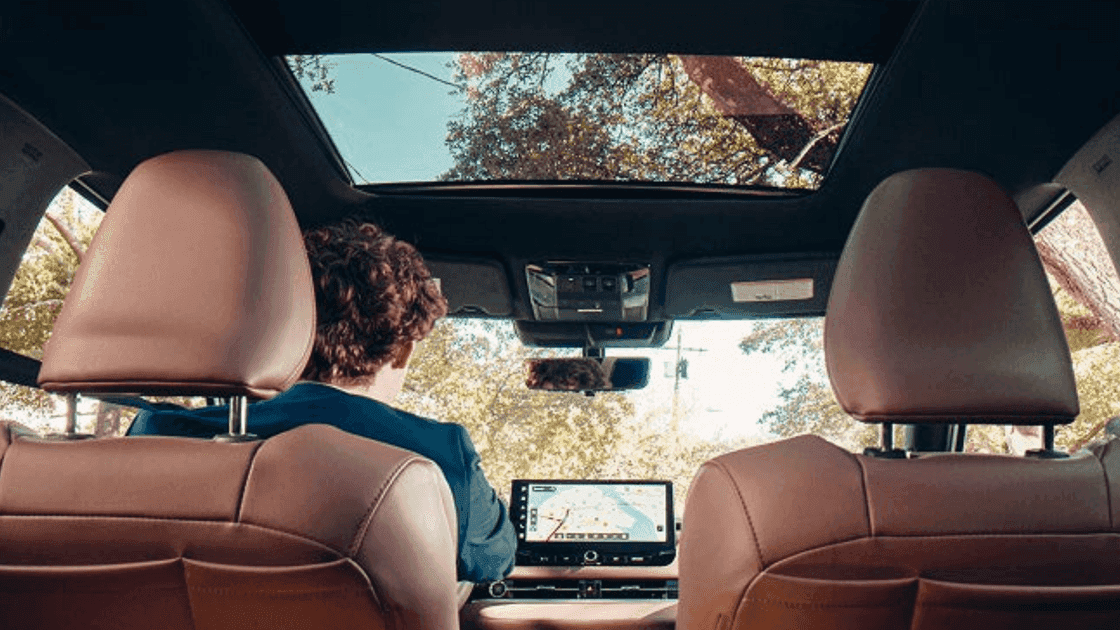
Seating materials include synthetic leather and available semi-aniline leather surfaces. Select trims offer heated and ventilated front seats and heated second-row seats. The second-row seating structure is engineered to distribute pressure evenly, improving comfort during extended travel.
Digital Interface and Connectivity Systems
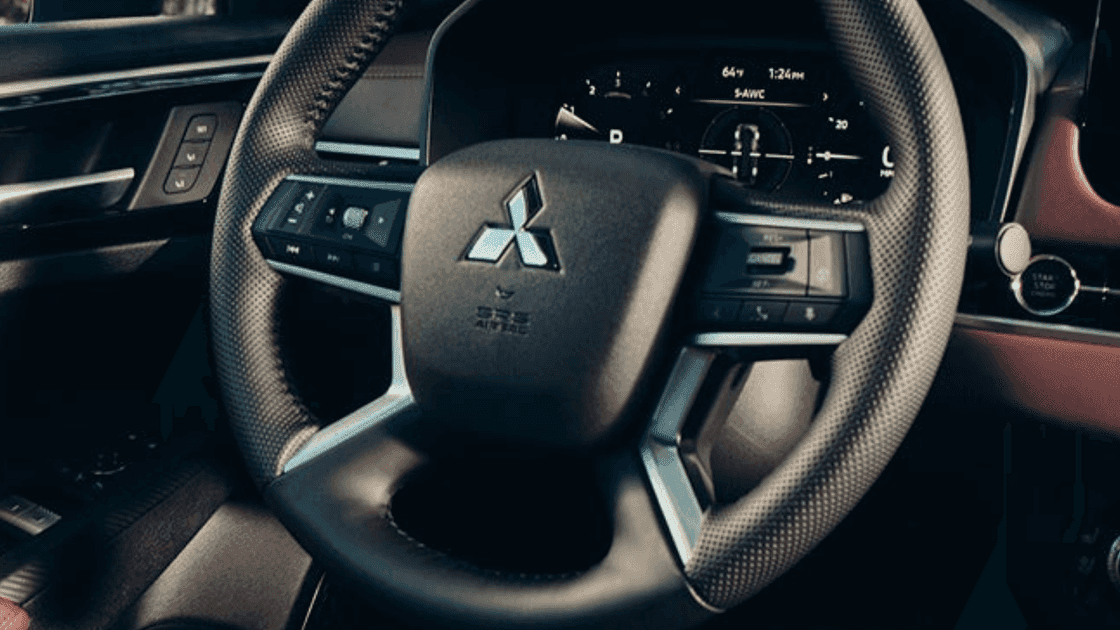
The 2026 Mitsubishi Outlander features a 12.3-inch digital driver display and a 12.3-inch center-mounted infotainment system. The infotainment display uses a high-resolution interface with revised graphics and consistent visual formatting across system menus. The layout is designed to provide clear information without unnecessary complexity.
Wireless Apple CarPlay® and Android Auto™ are included, allowing integration of smartphone-based applications without the need for physical connections. The system supports navigation functions, media playback, and communication features through the central display.
An available digital rearview mirror provides an alternative view using a rear-mounted camera. This feature improves visibility when rearward sightlines are obstructed by passengers or cargo. The system includes both conventional mirror and digital display modes.
Yamaha® Audio System Engineering
The 2026 Mitsubishi Outlander includes two Yamaha®-developed audio systems designed for precise sound reproduction. The Dynamic Sound Yamaha® Premium system uses eight speakers, while the Dynamic Sound Yamaha® Ultimate system uses 12 speakers and a subwoofer with a total output of 1,650 watts.
The audio system uses dual amplifiers to separate low-frequency and mid-to-high frequency sound processing. A digital signal processor manages audio output to maintain clarity and balance. The system includes multiple sound modes that adjust audio characteristics based on user preference.
Additional engineering includes enhanced sound insulation and sealed door structures that function as speaker enclosures. This design reduces external noise and improves sound quality within the cabin.
Structural Integrity and Safety Engineering
The 2026 Mitsubishi Outlander uses a Reinforced Impact Safety Evolution unibody structure designed to distribute collision forces and maintain cabin integrity. The structure incorporates ultra-high tensile-strength steel in key areas to improve rigidity while reducing weight.
Energy absorption is managed through reinforced front structures and a system of floor members designed to distribute impact forces. The vehicle includes a front center airbag positioned between the driver and front passenger seats. This airbag deploys during certain side-impact events to reduce the risk of occupant contact.
Additional sound insulation materials are applied throughout the body structure to reduce road noise and improve cabin isolation. These materials are placed in multiple areas, including door panels, pillars, and floor sections, to enhance overall refinement.
Schedule a Test Ride Today
Drivers seeking a detailed understanding of the 2026 Mitsubishi Outlander can evaluate its technical systems through direct operation. A test drive provides the opportunity to assess the hybrid powertrain, torque delivery, and transmission response under typical driving conditions. The steering calibration and suspension tuning can be experienced across different road surfaces to understand their impact on handling and ride comfort. The digital interface, connectivity features, and audio systems can be reviewed in a controlled environment to evaluate usability and performance. Visit Younger Mitsubishi near Owings Mills, MD to schedule a test drive and examine the vehicle’s engineering features in person.